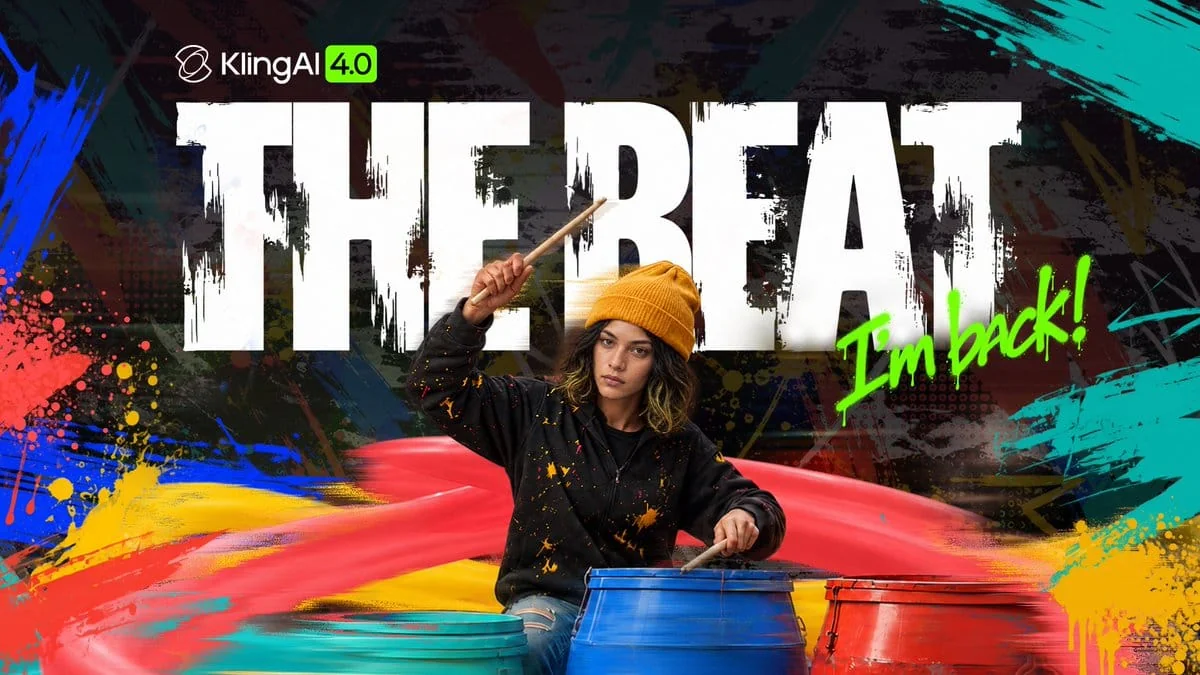
The landscape of generative AI video has reached another monumental turning point in Autumn 2026. Kuaishou’s Kling AI has officially unveiled its flagship next-generation model: Kling 4.0 (with Kling 4.0 Flash rolling out as early access on September 28 for Ultra Yearly subscribers, ahead of the general October release). Moving beyond the era of choppy 5-to-10-second prompt-and-pray generations, Kling 4.0 introduces native 3-to-30-second continuous shots, up to 10 director keyframes, and a 15-asset multimodal Omni Reference system.
However, with Kling 4.0 currently locked behind high-tier annual subscriptions, creators and commercial studios want to know: What are the real-world capabilities, technical boundaries, and limitations of Kling 4.0? How does it compare to Gemini Omni—Google DeepMind's unified platform famous for conversational chat directing and native 48kHz synchronized audio?
This in-depth review breaks down the architecture of Kling 4.0, analyzes its official launch video THE BEAT, clarifies common misconceptions, and delivers an objective, head-to-head comparison: Kling 4.0 vs Gemini Omni.
Skip the closed waitlists. Experience conversational video directing, keyframe camera control, and native synchronized audio in your browser today with Gemini Omni Studio.
1. Inside Kling 4.0: The 5 Major Upgrades#
According to Kling's official developer documentation and technical releases, Kling 4.0 represents an ambitious pivot from single-shot generation toward structured project workflows:
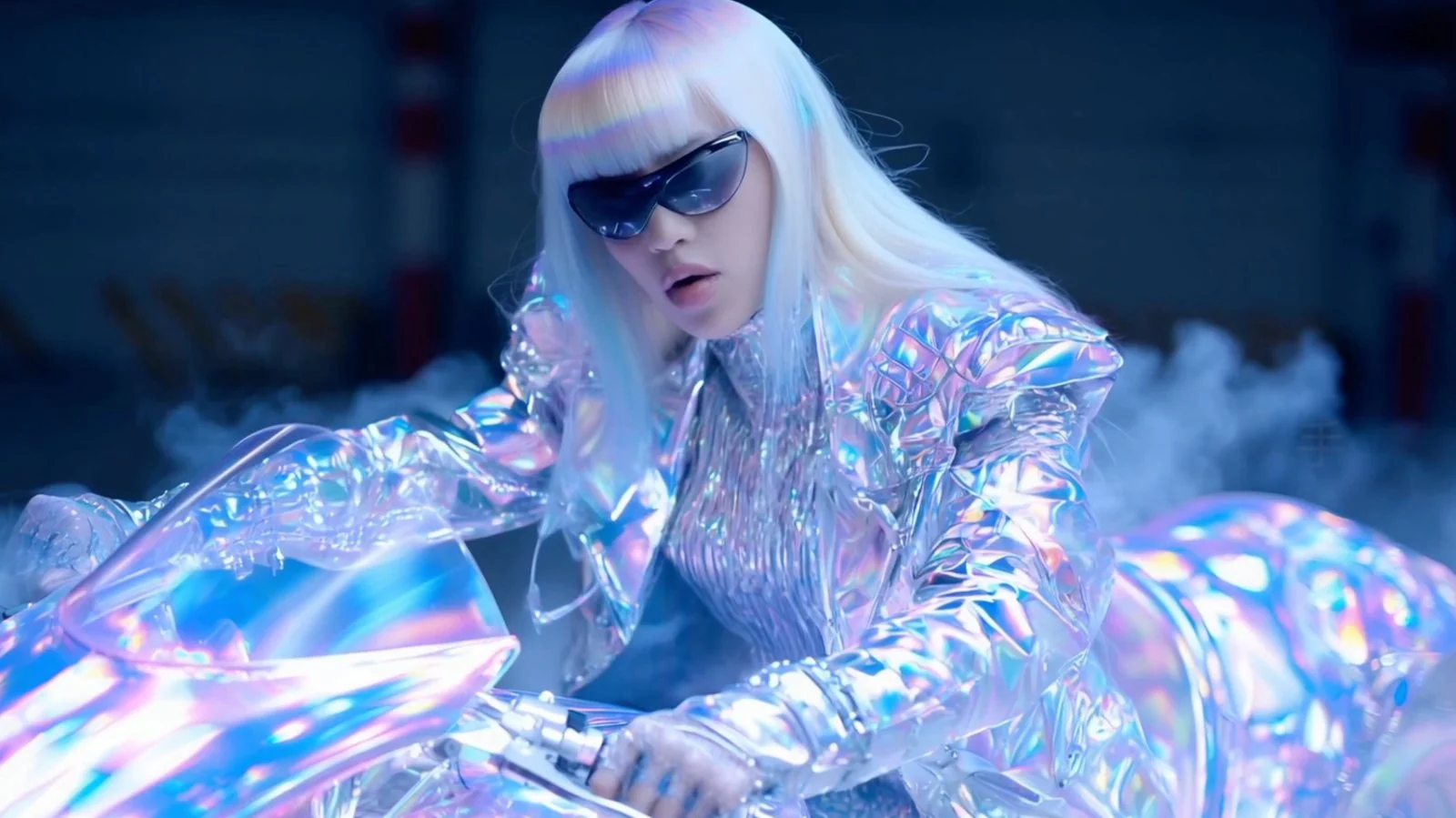
1. 30-Second Native Clip Duration (Long-Form Storytelling)#
Conventional generative models were constrained to 4-to-10-second outputs, forcing filmmakers to constantly chain extensions and gamble on scene consistency. Kling 4.0 elevates single-pass generation to 3~30 seconds, giving the neural network sufficient temporal latent depth to plan coherent character actions, camera movements, and emotional transitions.
2. Multi-Point Camera Choreography: Up to 10 Keyframes#
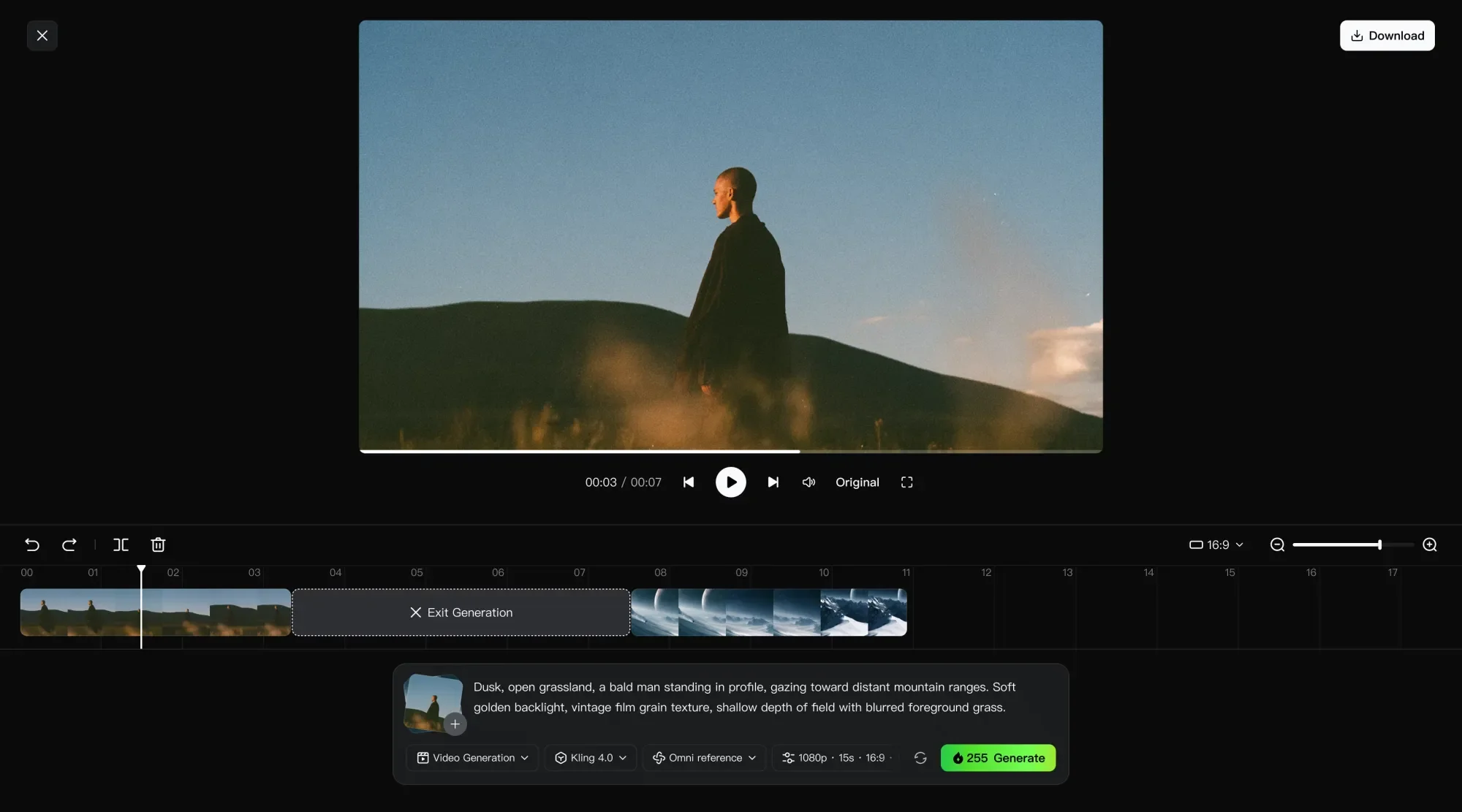
In prior image-to-video models, creators were restricted to setting only a start frame and an end frame. Kling 4.0 enables inserting up to 10 user-defined keyframes across the timeline:
- Directors can position exact character poses, set designs, and camera angles at specific intervals (e.g., 3s, 8s, 16s, 24s);
- Neural interpolation bridges these anchors, sharply curbing unexpected deformations and abrupt perspective shifts.
3. Omni Reference: 15 Multimodal Anchors#
Kling 4.0 introduces a modular reference pipeline allowing creators to supply up to 15 distinct assets:
- Up to 10 static images: Lock in character facial identity, tailored costumes, and specific product shapes;
- Up to 5 reference videos (30s maximum combined): Transfer dynamic motions, camera pans, and kinetic pacing;
- Voice references & 7 subject entities: Prevent identity blending when multiple subjects occupy the same frame.
4. 8,000-Token Scripts & 4K / 10-Bit HDR Output#
The prompt engine now accepts up to 8,000 tokens, letting creators paste complete screenplay beats, lighting notes, and cinematic stage directions. On the visual output side, Kling 4.0 introduces native 4K resolution and 10-bit HDR color pipelines.
5. Unified Canvas & Timeline Extension (Up to 2 Minutes)#
Kling 4.0 consolidates text, image, video, and audio generation into a unified interface, complete with a node-based Canvas and a multi-track timeline. By chaining iterative extensions, final projects can be extended up to 2 minutes.
6. Technical Clarifications: Real Limits & Boundaries of Kling 4.0#
To maintain rigorous technical clarity, several points frequently confused in social media discussions should be highlighted:
- Single Pass vs. 2-Minute Extension: Kling 4.0's single-pass generation limit is 30 seconds. The "2 minutes" specification refers to the maximum cumulative duration achieved by repeatedly extending clips, and video extension is currently marked as rolling out incrementally on the official console;
- Phased 4K & 10-bit HDR Deployment: The early-access Kling 4.0 Flash primarily outputs in 720p/8-bit SDR. 1080p and 4K 10-bit HDR will arrive with the general release;
- Kling 4.0 Standard vs. Kling 4.0 Flash: Flash is optimized for lightweight rapid drafts and velocity. The upcoming standard flagship Kling 4.0 is the full-parameter model engineered for high-fidelity physics and 4K rendering;
- 8,000 Tokens Is Not 8,000 Words: Tokens represent sub-word units, though the ceiling is more than generous for multi-page screenplays.
2. Analyzing the Official Showcase: THE BEAT#
Kling AI debuted a 2-minute 37-second short film titled THE BEAT, following a rock drummer returning to the stage. The film spotlights Kling 4.0's capabilities in dynamic lighting, rapid limb tracking, and rhythmic percussion movements:
Production Takeaway: THE BEAT proves what is possible when high-end assets and careful directorial planning meet modern diffusion models. However, it is vital to recognize that the 157-second runtime was assembled from selected 10–30-second generations, extensions, editorial trims, and professional color grading—not a single prompt output. In day-to-day production, creators still face latent drift during segment extensions and significant credit consumption.
3. Kling 4.0 vs Gemini Omni: Comprehensive Scorecard#
In the 2026 multimodal landscape, Kling 4.0 and Gemini Omni represent two distinct approaches to AI filmmaking: Kling emphasizes multi-reference parametric setup and timeline nodes, while Gemini Omni is engineered around conversational chat directing and end-to-end synchronized 48kHz audiovisual synthesis.
Here is how both platforms compare across production metrics:
| Feature / Dimension | Kuaishou Kling 4.0 | Gemini Omni |
|---|---|---|
| Creation Paradigm | Timeline Nodes, Canvas & Parameter Sliders | Conversational Chat Directing (Chat-Native Editing) |
| Native Audio & Sync | Stereo Sound, Basic Lip Sync | 48kHz Native Audiovisual (Dialogue, Foley & Dynamic BGM) |
| Camera & Trajectory Control | Up to 10 Keyframes | Start & End Keyframes + Neural Trajectory + 10s Temporal Context |
| Identity & Subject Stability | Omni Reference (15 Inputs Pool) | 7-Slot Multimodal Asset Pool (Face, Outfit & Voice ID Lock) |
| On-Screen Typography | Standard Titles (Occasional Distortion) | Class-Leading Typography (Zero-Artifact Cinematic Text) |
| Drafting Speed & Cost | Flash Tier (Restricted to Yearly, Tiered Cost) | 360p Fast Draft (~3s Turnaround) + 4K Cinema Denoise + Auto-Refund |
| Access & Free Trial | Locked to Ultra Yearly Paid Subscribers | 30 Free Credits Instant Access (No Card Required) |
| Commercial Protection | Tier-dependent Commercial Terms | 100% Commercial Usage Rights + Built-in Google SynthID Watermark |
4. Why Gemini Omni Is the Practical Choice for Daily Production#
While Kling 4.0 brings impressive cinematic benchmarks, its steep subscription barrier and node complexity can slow down agile creators. Gemini Omni solves these workflow hurdles with three distinct advantages:
1. Conversational Chat Directing: Iterate Without Rerolling#
With traditional timeline tools, modifying a 15-second shot because of a lighting mismatch or costume error requires reconfiguring parameters, re-uploading assets, and spending full credits on a total re-render.
In Gemini Omni, you iterate via conversational instructions just like talking to a DP on set:
- "Change the afternoon sunlight on the background street to a rainy cyberpunk neon night, keeping the runner's sprint motion identical."
- "Push in slowly on the character's face over the final 3 seconds and have their expression soften into a subtle smile."
By holding scene context in latent memory, Gemini Omni applies localized diffusion edits without rebuilding the entire world from scratch.
2. Native 48kHz Synced Audio: Eliminate Costly Audio Post-Production#
Most AI video platforms still output silent cinema or flat atmospheric hums. Creators are left to scour stock sound libraries, purchase SFX packs, and manually align footsteps, door slams, and vocal dubs in external editors.
Gemini Omni generates video frames and broadcast-grade 48kHz audio simultaneously in a unified pass:
- Phoneme-Accurate Lip Sync: Speech phonemes are mathematically aligned to lip geometry and facial micro-expressions;
- Physical Foley Acoustics: Tire screeches, rain splashes, and shattered glass synthesize with natural spatial reverb matching the camera distance;
- Adaptive Musical Scoring: Background music automatically modulates its crescendo and tempo to reflect visual narrative tension.
3. "360p Fast Draft to 4K Master" Pipeline: Slash Experimentation Costs by 80%#
High-resolution 4K generation is computationally intensive. Burning through monthly credit allocations just to test camera angles is a major friction point for creators.
Gemini Omni introduces a hybrid two-tier workflow:
- 360p Fast Draft: Generates proof-of-concept clips in ~3 seconds with minimal credit draw, letting you confirm pacing and composition in moments;
- 4K Cinema Upscale: Once the draft matches your creative vision, upscale to full 4K master quality with temporal denoising;
- Millisecond Auto-Refund Safeguard: If a network timeout or safety trigger halts rendering, deducted credits are immediately refunded back to your balance automatically.
Test unlimited concepts at breakneck speed, then export 4K broadcast masters with complete confidence.
5. Step-by-Step Production Workflow: From Concept to 4K Master#
Follow this streamlined workflow to produce professional cinematic video with Gemini Omni:
flowchart LR
    A["Step 1: Write Script / Keyframes"] --> B["Step 2: 360p Fast Draft (~3s)"]
    B --> C{"Pacing & Motion Approved?"}
    C -- No --> D["Chat Instruction Refinement"]
    D --> B
    C -- Yes --> E["Step 3: 48kHz Native Audio Sync"]
    E --> F["Step 4: 4K Cinema Master Export"]
- Establish Perspective with Keyframes: Open Gemini Omni Image & Video Studio. Upload your Start Frame to anchor character styling and initial framing, and your End Frame to define the terminal composition.
- Generate a 360p Fast Draft: Select Fast Draft mode. In approximately 3 seconds, evaluate camera trajectory, subject kinetics, and scene transitions without burning credits.
- Refine via Conversational Prompts: Type natural language adjustments in the chat window, such as: "Ease the camera deceleration over the last 2 seconds and enhance golden hour rim lighting."
- Synthesize 48kHz Audio & Upscale to 4K: Enable Native Audio generation for automatic Foley, dialogue, and soundtrack alignment. Export your watermark-free, commercially certified 4K video.
6. Frequently Asked Questions (FAQ)#
Can anyone access Kling 4.0 for free right now?#
No. Kuaishou has currently restricted early access to Kling 4.0 Flash to paid Ultra Yearly subscribers. General public availability is slated for mid-to-late October 2026, with official free credit tiers yet to be confirmed. If you want to create cutting-edge AI video today with no upfront cost, launch Gemini Omni Studio for 30 free credits upon signup—no credit card required.
Do 10 keyframes prevent character face drift completely in Kling 4.0?#
Keyframes anchor critical transition points, but the frames generated in between still rely on neural interpolation. If camera angles between consecutive keyframes exceed 180 degrees or lighting undergoes radical shifts, subtle identity drift can still occur. Clear descriptive prompts alongside keyframes are recommended.
What is the biggest difference between Gemini Omni and Kling 4.0?#
The core distinction lies in workflow speed and creative interface. Kling 4.0 favors a timeline and node-based parameter dashboard. Gemini Omni prioritizes Conversational Chat Directing—allowing creators to iteratively polish video scenes via natural text dialogue—combined with native 48kHz audiovisual synthesis and a rapid 360p draft mode that keeps experimentation fast and affordable.
Can videos generated on Gemini Omni be monetized commercially?#
Yes. All video, image, and audio assets generated on paid Gemini Omni tiers carry 100% unrestricted commercial rights, watermark-free downloads, and Google SynthID provenance encoding to ensure full compliance for broadcast, YouTube, social ads, and client deliverables.
Conclusion: Empower Your Video Production Today#
The announcement of Kuaishou's Kling 4.0 represents an impressive milestone for AI cinema, demonstrating the power of 30-second continuous generations and 10-keyframe timelines. Yet for creators who need an agile, production-ready solution today, Gemini Omni offers the ideal blend of conversational directing, native 48kHz audio, zero waitlists, and affordable drafting economics.
Ready to transform your ideas into cinematic reality? Start directing now!
Unlock chat-based video editing, keyframe motion choreography, and native synchronized sound. No credit card required—begin creating directly in your browser!